EEG-Face: A Facial-Image Stimulated EEG Data-Set for Analysis of Brain Perceived Multimedia
ACM Multimedia (ACM MM)
Wuxia Zhang, Yang Xin, Shibo lv, Xin Zhang, Xiang Zhong, Jianmin Jiang*
Shenzhen University
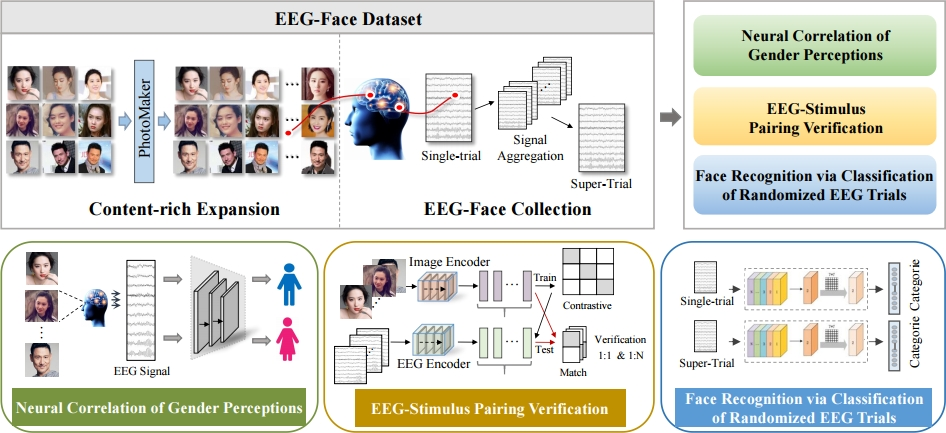
Figure 1: Illustration of architectural construction of EEG-Face and its usability tests.
Abstract
Over recent years, EEG-based brain decoding of perceived multimedia is emerging to be an important multidisciplinary research area. Lack of data sets with multimedia stimuli, however, presents a significant challenge for its further advancement. In this paper, we establish a facial-image stimulated EEG dataset, named as EEG-Face, to address the challenge and provide a crucial support for relevant research, such as brain-computer interface (BCI), face recognition via brain-perceived EEGs, and multimedia content analysis via brain perception activities. As facial images not only distinguish between genders but also dive deeper into individual differences, our proposed EEG-Face provides larger scope, more focus, and greater potential for dedicated research on brain perception of human faces. As shown in Figure 1, the proposed EEG-Face essentially consists of 20,000 brain responded EEG trials stimulated with 40 individual faces, all of whom are Chinese film stars. Following the establishment of the dataset, a range of experiments over EEG-Face is carried out to demonstrate its usability and feasibility, which include: (i) neural correlation of gender perceptions; (ii) EEG-Stimulus pairing verification; and (iii) face recognition via classification of randomized EEG trials. The dataset and the codes for all reported experiments are available from https://github.com/eeg-wx2024/EEG-Face.
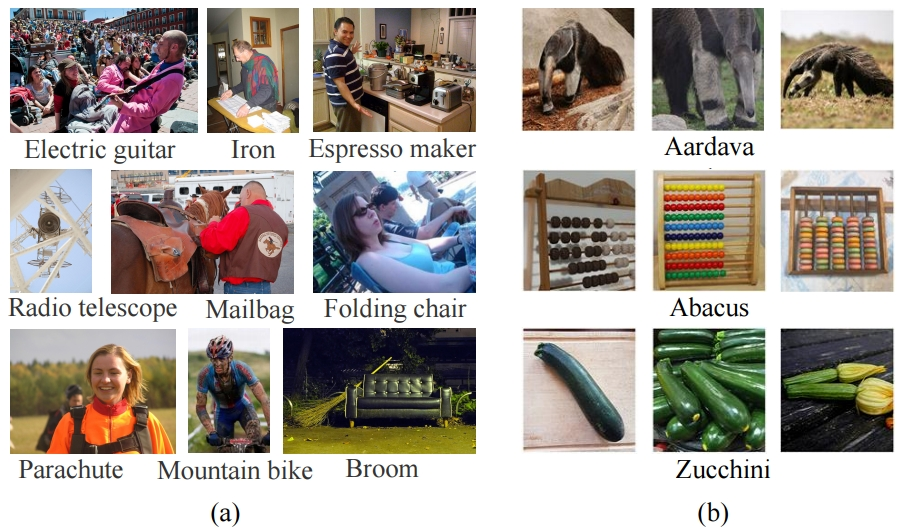
Figure 2: Illustration of representative stimulation images: (a) samples for EEG-ImageNet; (b) samples for EEG data set by Gifford et al.
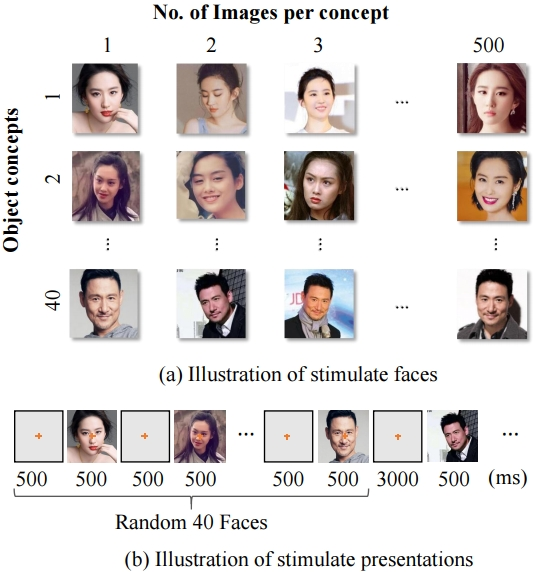
Figure 3: Structural overview of stimulation paradigm.
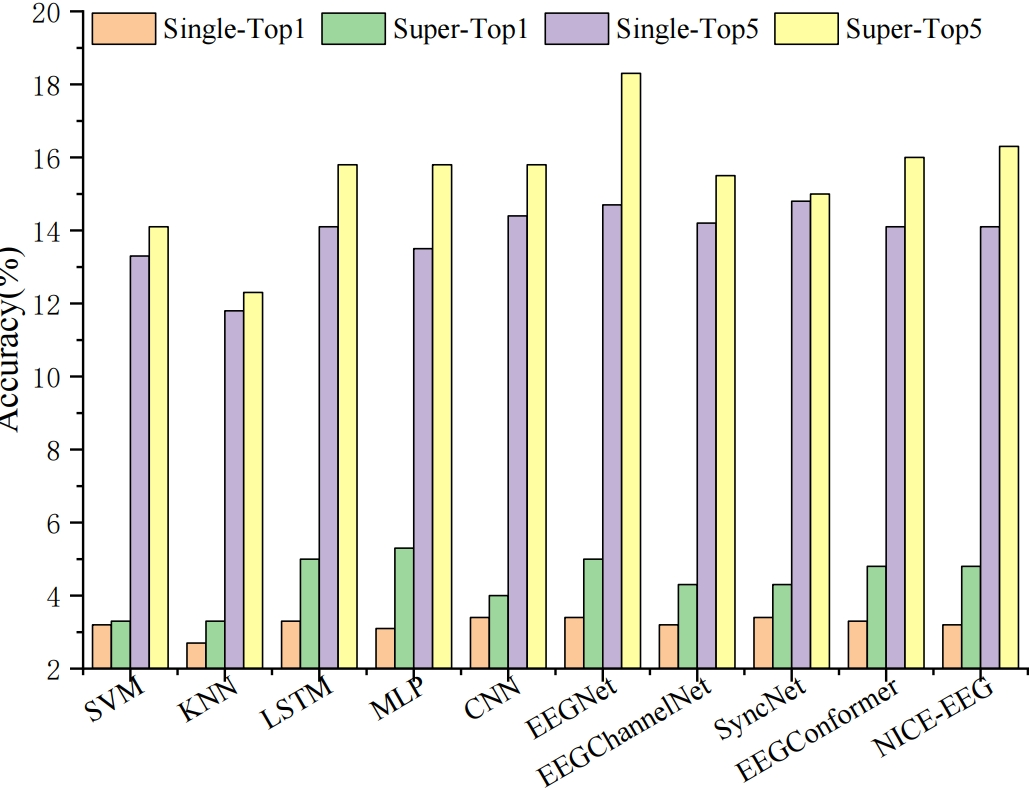
Figure 4: Comparative demonstration of face recognition between single trials and super-trials.
Acknowledgement
The authors wish to acknowledge the financial support from Natural Science Foundation China (NSFC) under the Grant No. 62032015 and W2412099.
Downloads


 SZU
SZU
 CN
CN